Why Change the Constitution?
May 27, 2011Why Change the Constitution?
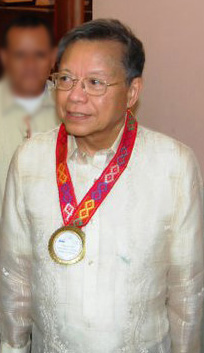
By Chief Justice Reynato S. Puno (ret.)
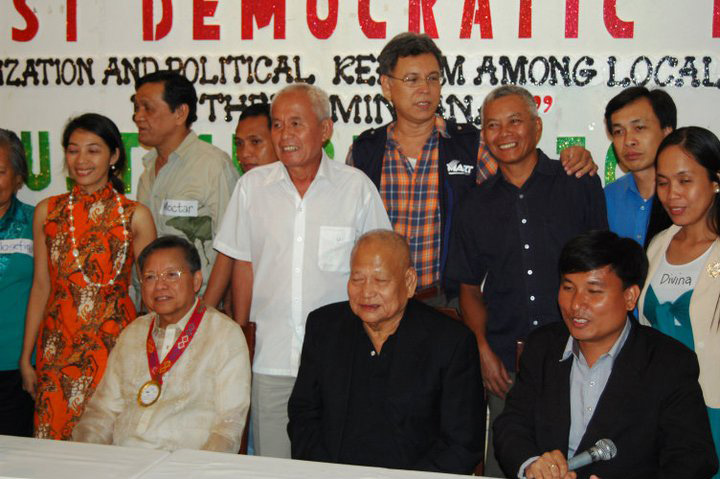
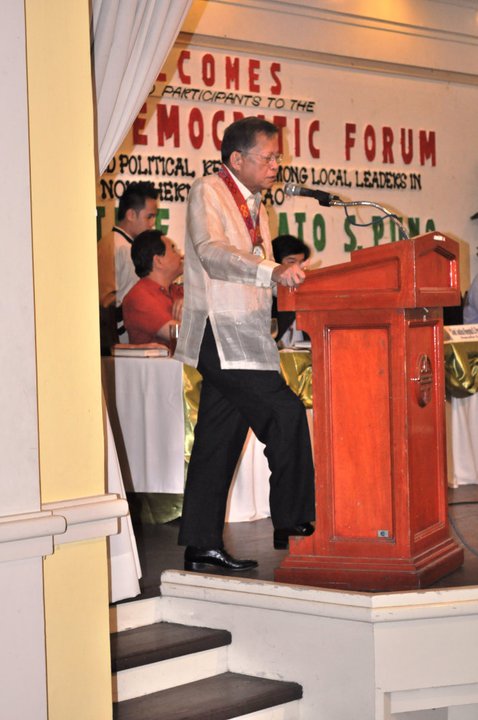
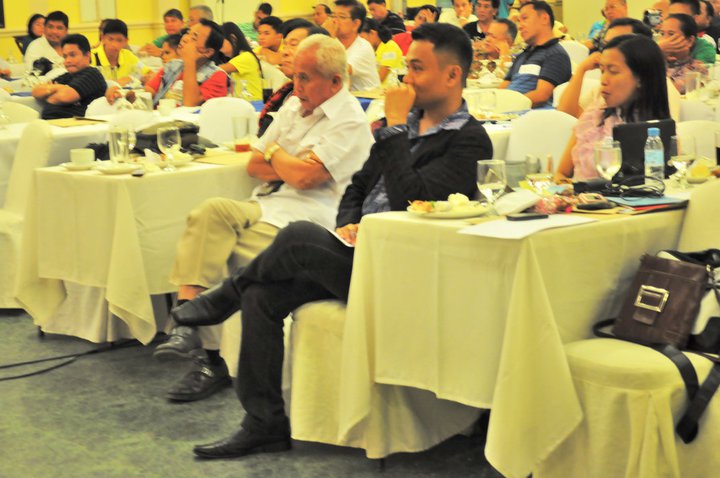
Centrist Democratic Forum on Decentralization and Political Reform among Local Leaders in Northern Mindanao
Grand Caprice, Limketkai Drive, Cagayan de Oro
14 May 2011
History repeats itself, so the adage goes. I hardly pay attention to this adage when I was young. As I grew older, I could not but marvel at the truth of the adage. If you look at our current news you will discover that they are repeats of past news, perhaps with some modifications but repeats nevertheless. To a movie goer, such repeats pose no problem. He simply tells himself, “Napanood ko na iyan,” and simply walks away.
I wish we can adopt that dismissiveness, that nonchalance, that indifference to problems that keep repeating themselves to Filipinos from generation to generation. If we give up, if we do not care anymore, then the Filipino is ready for the requiem.
What are some of these problems that keep on replaying themselves for more than a century? --- catch that, for more than a century now. Here are some:
One. During the Spanish time, the problem, the news was the lack of representation of the Filipino people in the Spanish Cortes, the Spanish lawmaking body. Rizal, del Pilar, Lopez Jaena, created a lot of noise and news against this anti-democratic practice.
What is new? Today, so many centuries after, the news is still lack of democratic representation of some sectors of our society but this time, in our Congress, the Executive and the Judiciary. I refer to the complaint of our Muslim brothers and sisters of their utter lack of representation in the Senate and the Supreme Court and underrepresentation in the Executive Department.
Two. Another recurring news is cheating during elections, during meetings to choose leaders. The Spaniards never allowed Filipinos to vote for their leaders. This anti-democratic practice was one reason for the revolution against Spain. We had our experience in choosing our leaders during our armed revolution against Spain. The revolution was led by Bonifacio and Aguinaldo. Soon, due to difference in style, intelligence and temper, rivalry between Bonifacio and Aguinaldo developed, hence, they formed the Magdalo and Magdiwang factions. They knew that an armed revolution cannot be waged by divided revolutionaries. Hence, Bonifacio and Aguinaldo had a showdown on who would be the real leader of the revolution. They conducted an election of sort. Aguinaldo won. Bonifacio lost and he protested the use of fraud and force by the Aguinaldo camp. Bonifacio did not have the opportunity to prove his election grievance. He was executed. Yes, this was the first time, the Filipinos, by themselves, voted on who would be their leader. And it was a catastrophe.
Use of violence, force, and fraud was news then, it is still news now. Do you know that in Asia, we were the first to exercise the right to vote? That democratic right was given to us by Americans more than a century ago. Look how we prostituted our right to vote, which is the primary means by which the people express their sovereignty. In the 1964 presidential election, where President Quirino bested Jose P. Laurel, the historians tell us that “the birds and the bees” voted. In the 1986 snap Presidential election between Pres. Marcos and Mrs. Cory Aquino, the pervasiveness of electoral fraud prompted the walkout of people canvassing its result, and that triggered the EDSA People Power revolution. Last year, we had our national and local elections where for the first time we resorted to automated election. Guess if the automated election got rid of the use of force and fraud in our elections. The categorical answer is no, it did not. Truth to tell, we have more electoral protests after we resorted to automated elections and spent billions of pesos for the same. Cheating in election is still hot news today.
Three. Look at the complaints about too much power given to the President., and the abuse of the excessive Presidential powers to the detriment of democracy. Again, centuries ago, we read in history books, allegations on how some of our past Executives used/misused their overwhelming powers, starting from Aguinaldo when he ruled as our first dictator fighting the war against Spain. For this reason, most our Presidents were threatened or were actually charged with impeachment in Congress, Presidents Quirino, Macapagal, Marcos, Estrada, GMA, to name mention examples.
Today, the use or misuse of presidential powers is again top of the line news. We read arguments, pro and con, on the issue of whether Pres. Aquino is properly using his vast executive powers in forming the Truth Commission, dismissing high ranking officials in government without CESO, urging the members of the Liberal Party to vote for the impeachment of the Ombudsman, etc. We will never see the day when a President can escape denunciation for the use or misuse of his overly broad powers, especially as he approaches the end of his term of office.
Fourth. Another recurring news is the conflict between the legislative and the Chief Executive and his officials. Not a few Presidents considered Congress as an obstacle to their reform programs, denouncing legislators as incapable of reformation. Hence, Pres. Marcos abolished Congress when he declared martial law. Similarly, Pres. Aquino refused to revive Congress under the Freedom Constitution. On the other hand, sometimes it is Congress that entertains an unpalatable view of the President as chief of the evil empire. Thus, we saw how the House of Representatives impeached Pres. Estrada, a process that led to the second EDSA revolution. Then, we saw the dog fight between President Gloria Macapagal-Arroyo and the Congress. Ostensibly wielding its power to investigate in aid of legislation, Congress summoned members of the cabinet and sub-cabinet of President Arroyo allegedly involved in irregularities like the so-called Fertilizer Scam, ZTE broadband contract anomaly, etc. Pres. Arroyo did not allow her officials to honor the summons and invoked her executive privilege. The result of the squabbling was deadlock between the two great branches of government, the paralysis of our progress.
This is still news today. The Senate investigation of the AFP funds is but a continuation of the old fight between then President Arroyo and Congress. So too was the impeachment of the Ombudsman, which is perceived as but an aftermath of the battle between President Arroyo and Congress. But this time, the shoe is on the other foot. The former opponents of President Arroyo are in power and playing the role of hunters, instead of the hunted.
Will we see an end to this interminable fight between the President and Congress?
The answer is again, no. There will be short pauses in the fight but they are just that --- pauses. But there will be no end to the friction between the President and Congress. The reason is simple. The Constitution precisely designed for this friction to exist in our government. It was thought that this friction would be healthy for our democracy. It was believed that this friction would prevent tyranny on the part of one branch of government over the others. After years and years of experience, we can conclude that at best, that idea is pure romanticism and at worst, is damaging to our democracy. The creative friction that separation of powers is designed to produce is turning out to be a flame, and is about to be a fire that will burn down our house of democracy.
Fifth. The recurring news about the lack of independence of the Judiciary. Again, read our legal history. The message it imparts is that for the most part, our courts have not attained that independence enjoyed by their counterparts abroad. Certainly, during the years of American occupation, our Supreme Court lacked independence for its decisions were reviewed by the US Supreme Court. Indeed, its decisions were reversed not a few times. Fast forward its history and still, the complaint is that under the 1935 Constitution, the Judiciary cannot stand its ground against the two other branches of government. This weakness was fully exposed when Pres. Marcos declared martial law. All the significant decrees of Pres. Marcos passed judicial scrutiny and this raised a lot of howl among proponents of the rule of law.
Today, the Supreme Court is again hot news. Chief Justice Corona is quoted as complaining that the independence of the Supreme Court is under siege. He gripes that some quarters are still assailing his appointment as Chief Justice. He says the proposed budget of the Judiciary has been unreasonably slashed. And, he alleges that some decisions of the High Court have made the powers that be unhappy and in retaliatory mode. If news reports are to be believed, some members of the lower house are poised to start the impeachment process against some justices.
Sixth. The recurring news that a great many of our local government units cannot progress because of too much control of the central government. During the Spanish colonial rule, they called this control as the imperialism of Madrid, it became the imperialism of Washington, now it is the imperialism of Manila.
In the bygone days, local governments fought to be unleashed from the too strict control of the national government. They were given scant power, no control over their national resources, no right of release of their IRA. It took years, several years for them to fight for their right and their rights were given in installments. Today, the policy is decentralization in general and autonomy in a region in Mindanao.
Has the squabble ended?
Obviously not. We have decentralization but still, our governors and mayors have to make a beeline to DBM with their begging bowl for the release of their IRA. A great number of our Muslim leaders in Mindanao are protesting the proposed postponement of the ARRM election for Governor. A spokesman of Malacanang called the ARRM autonomy a failed experiment.
And do not forget the hullabaloo being raised by the League of Cities over the decision of the SC validating the creation of some cities by Congress. Some commentators say that at bottom, the first is over money, over resources. The new cities mean diminution of existing resources of the present cities.
Again, the point is that the concentration of power in our national government is very much alive. Power must be devolved not only horizontally but vertically, meaning, down to the local governments in a significant way.
We can go on and on but we don’t have the luxury of time. With the degradation of our democracy under the present form of government, with the decadence that has taken place in our country for centuries now, what do we do? What can we do? Do we say constitutional change is not a priority? Do we dismiss the Constitution as a mere piece of toiletry? Nobody will buy that dismissive stance. Others on the other hand, contend that what we need is not change in the Constitution but change of character. The translation is let us just pray, let us wait for the Second Coming of the Lord, wait for the Last Judgment where our character will be adjudged.
I submit that we cannot wait any longer. Our experience of failure, centuries after centuries is enough. It is ridiculous to argue that we are already familiar with our failures and let us just continue with them. The call for the review of the structure of our government, a reexamination of our Constitution is timely as it has been a consistent one from Recto, from Laurel, from almost all of our great constitutionalists. Let me leave you the call of Vicente G. Sinco, a former President of UP, former Dean of the UP College of Law, delegate to the ConCon of 1971, and a foremost constitutionalist.
As to the Presidency, it is necessary xxx to reform its nature, organization and power. As now established under our Constitution, the position of the President of the Philippines is a replica of that of the President of United States. The latter was conceived and created by the Founding Fathers of America on the basis of historical background and the social, economic and political needs and conditions of their country which are obviously different in many ways from those of our own. Thus, the adoption of a feature of the American system of our country should not be attempted without thorough study to determine its applicability or suitability to our national character, our cultural environment, and social customs and the political ideas of our mature leaders and statesmen. The fact that we had been under the United States or over 60 years is not proof that we have become Americans in our cultural and political life and spirit.(Philconsa Reader on Constitutional and Policy Issues, p. 237) . A pleasant day to all!
***
For more information, please contact the Regional Secretary at the email add: cdmnorthernmindanao.lambigit@gmail.com and feel free to visit the website at www.lambigit.yolasite.com and www.cdm-philippines.org
Posted by CDM Lambigit in Northern Mindanao. Posted In : Messages